
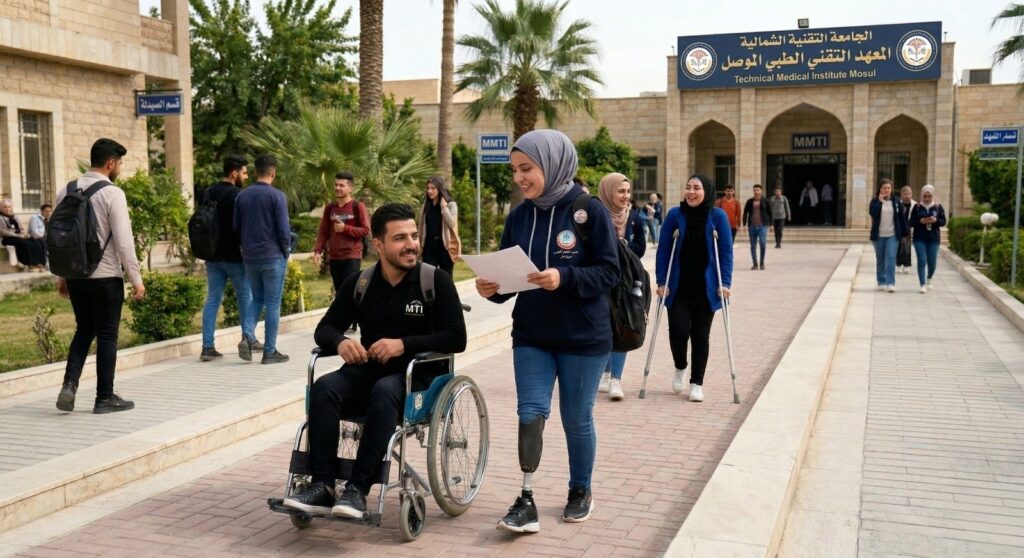
The Department of Nursing Techniques operates from a humanitarian and academic vision, believing that the nursing profession is the core of healthcare, and that diversity within this sector enriches both the educational and human experience. The department is committed to providing an inclusive and equitable educational environment that guarantees all students, with their varying abilities, the full right to receive outstanding academic education and high-quality clinical training. This includes overcoming obstacles and establishing regulations that enable students with special needs to develop their skills and achieve their career aspirations.
Purpose of the Guide: To introduce students to the rights, duties, and regulations that ensure their integration and fairness in theoretical lectures, clinical simulation and manikin labs, and during field training periods within hospitals and health centers, while fully maintaining patient safety and safe nursing care standards.
2. General Legislative Principles (Legal Reference)
This guide is based on higher education legislation, regulations for the care of persons with disabilities and special needs, and relevant international conventions. It is centered on:
Equal Opportunity and Non-Discrimination: Guaranteeing the student’s right to education and fair evaluation without any exclusion or bias due to the nature of their needs.
Accessibility and Universal Design: The commitment of the department and the college to adapt the educational environment and learning methods to suit the student’s physical or sensory abilities.
Confidentiality and Digital Privacy: Handling medical reports and students’ private files with absolute confidentiality. They may only be accessed by the specialized support committee, with the student’s consent, to determine the necessary accommodations.
3. Academic and Environmental Accommodations
Given the direct hands-on nature of the nursing department (such as blood sampling, administering injections, wound care, and vital signs monitoring), approved accommodations include:
A. Laboratories, Clinical, and Field Training:
Clinical Simulation Labs Adaptation: Designing practical training stations and educational manikins to facilitate access for students with physical disabilities, while providing dedicated comfortable seating during long skill-training sessions.
Assistive Clinical Technology: Permitting the use of digital and talking vital signs monitors, or digital magnifiers to accurately read medication dosages in the lab environment.
Field Training Environment Adaptation (Hospitals): Coordinating with the administrations of accredited training hospitals and health centers to place students in wards or departments that match their physical and sensory abilities (e.g., outpatient clinics, health education wards, or nursing administration) ensuring the safety of both the student and the patient.
B. Theoretical Lectures and Academic Evaluation:
Flexibility in Evaluation and Examinations: Granting students additional time in theoretical exams and Objective Structured Clinical Examinations (OSCE), and adapting exam formats to rephrase written skills into digital or oral formats that suit the student’s condition or learning difficulties.
Availability of Educational Media: Providing Nursing Procedures Protocols in flexible electronic formats that support searching, text-to-speech, and font magnification.
4. Mechanism for Obtaining Support and Accommodations
To benefit from these legislative policies, students must follow these organizational steps:
Submitting the Request: The student submits a formal request to the “Special Needs Care Committee” in the department at the beginning of the semester or academic year.
Supporting Documentation: Attaching an official and certified medical report accurately explaining the nature of the need and the suggested accommodation recommendations.
Approving the “Individual Accommodation Plan”: The department administration meets with the academic and clinical supervisors to develop an individual support plan that ensures the student achieves the required core nursing competencies and skills, while considering health, safety, and security aspects for both the student and patients.
5. Rights and Duties
| Student Rights in the Nursing Department | Student Duties and Professional Commitment |
| Learning in a respectful, safe environment completely free from any bullying or discrimination practices by any party. | Strict compliance with infection control rules, occupational safety, and health regulations inside hospitals and laboratories. |
| Providing flexible options and alternatives in clinical training if there are temporary or permanent health obstacles in certain departments. | Early and honest disclosure of health conditions to ensure that neither the patient nor the student is exposed to any risk during direct care. |
| Receiving continuous academic and psychological guidance to direct the student toward the nursing specialties best suited to their abilities (medical-surgical, psychiatric, community nursing, etc.). | Continuous pursuit of accuracy and safety in providing nursing care, as it is a legal and ethical responsibility toward patients’ lives. |
6. Monitoring and Complaints Committee
If a student faces any difficulties in activating their approved accommodations, or encounters any obstacles in the practical training environment at hospitals, they have the right to submit a formal written complaint or grievance to the Head of the Department. The department administration is committed to reviewing the grievance and immediately coordinating with the training supervisors to take appropriate corrective measures within a period not exceeding (5) working days, ensuring the safety of their educational and professional path.