When Science Merges with Surrealist Art: An Inside Look into the World of Student and Painter Massarra Muhammad
In the realm of medical sciences, many study the details of the human body through books and lectures. However, student Massarra Muhammad chose to reshape these details with her own brush, crafting a unique success story where the precision of her specialization in “Optometry Techniques” intertwines with her passion for the world of surrealist art.
The Language of the Eyes: From Study Desks to the Sketchbook
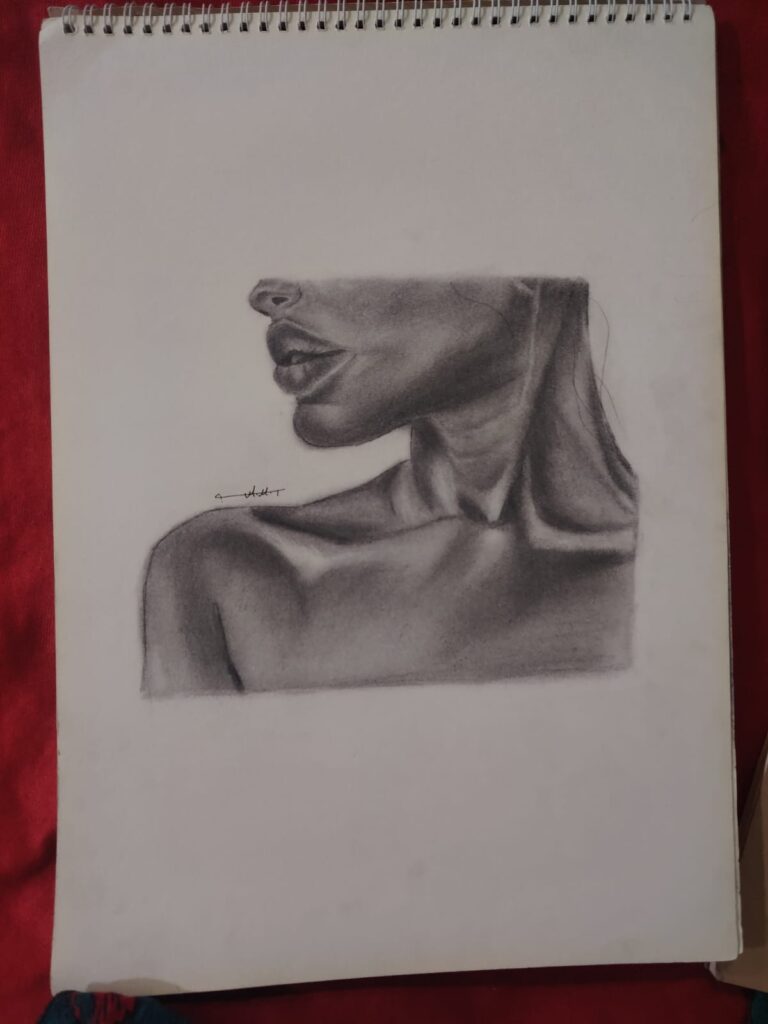
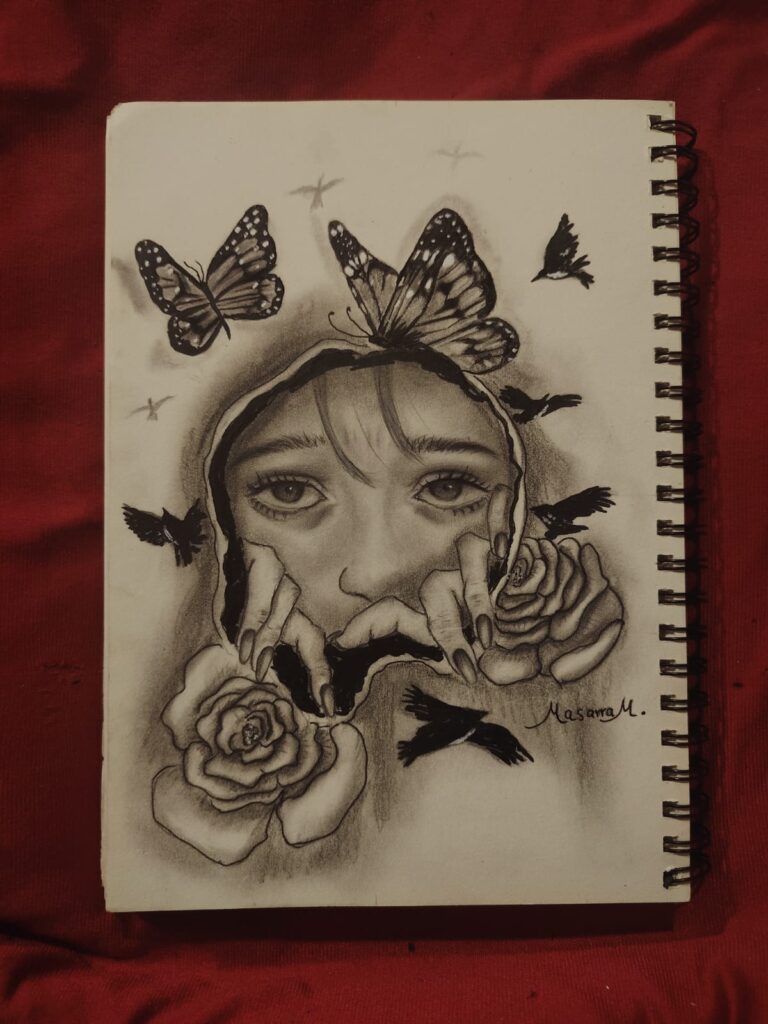
For Massarra, the eye is not just a medical organ whose physiological and optical functions she studies; it is the window to the soul and her primary source of inspiration. Her charcoal and pencil paintings embody a rare expressive depth, brilliantly highlighting the details of human glances, the shadows surrounding facial features, and the reflections of light within the pupil. This intense focus on visual anatomy reflects how the science of “Optometry” feeds her artistic imagination, transforming dry medical examination into paintings pulsing with life and expression.
The Surrealism of Letters and the Body: Paintings That Tell Stories
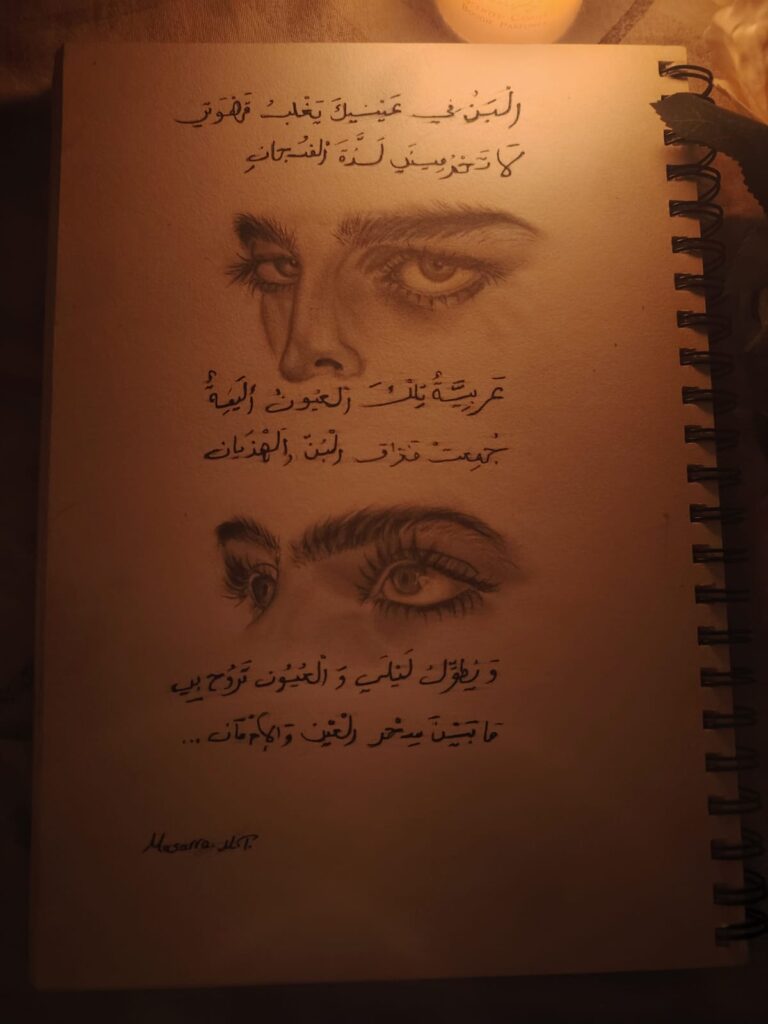
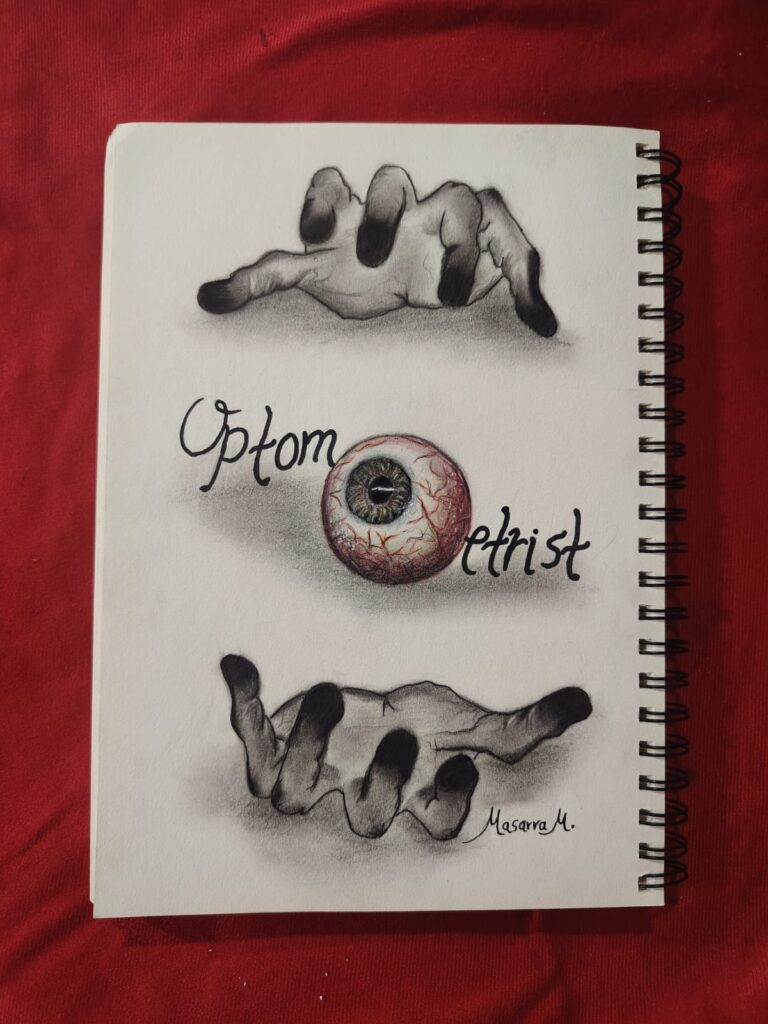
In her drawings, Massarra transcends traditional representation into the horizons of surrealist and expressionist schools. In one of her innovative paintings, she cleverly integrates a three-dimensional drawing of the human eye with the word “Optometrist,” surrounded by artistic touches of black and red, proudly declaring her dual scientific and artistic identity. Her talent also extends to simulating human emotions by drawing eyes intertwined with poetic verses, as well as embodying the details of facial features and hands with a fluid movement that highlights her high mastery of shading, contrast, and line control.
The Synergy of the Scientific Mind and Artistic Sense
Massarra Muhammad’s experience proves that true excellence lies in utilizing talent to serve scientific passion, and vice versa. Her ability to balance the demands of her precise medical studies with sitting for long hours to develop her unique artistic skills represents an inspiring model for creating a personal footprint. The very eye with which Massarra will examine her future patients is the same eye she uses to capture the finest details of beauty, translating them into enchanting pieces of art.
When Art Blossoms on Wood Slices: The Miniature Creativity Story of Student Noor Ali
Academic medical study has never been just rigid books and university curricula for those seeking excellence; rather, it is an open space to translate science into vibrant visual canvases. This is what student Noor Ali has proven. While forging her path in the “Optometry Techniques” specialization, she simultaneously crafted a remarkable artistic success story based on recycling natural elements and transforming them into miniature masterpieces.
Fingertips Tracing Medical Symbols on Natural Wood Slices
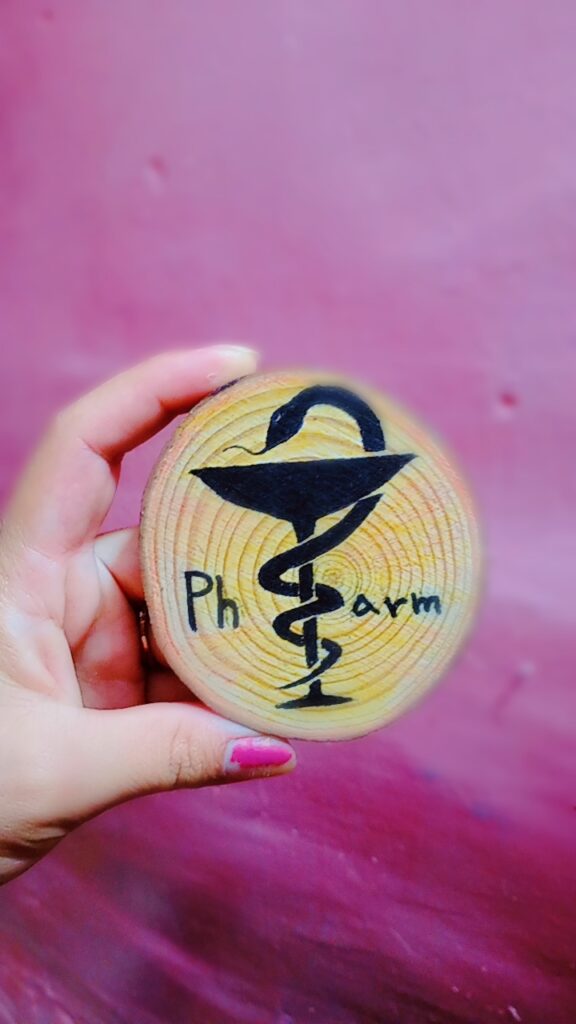
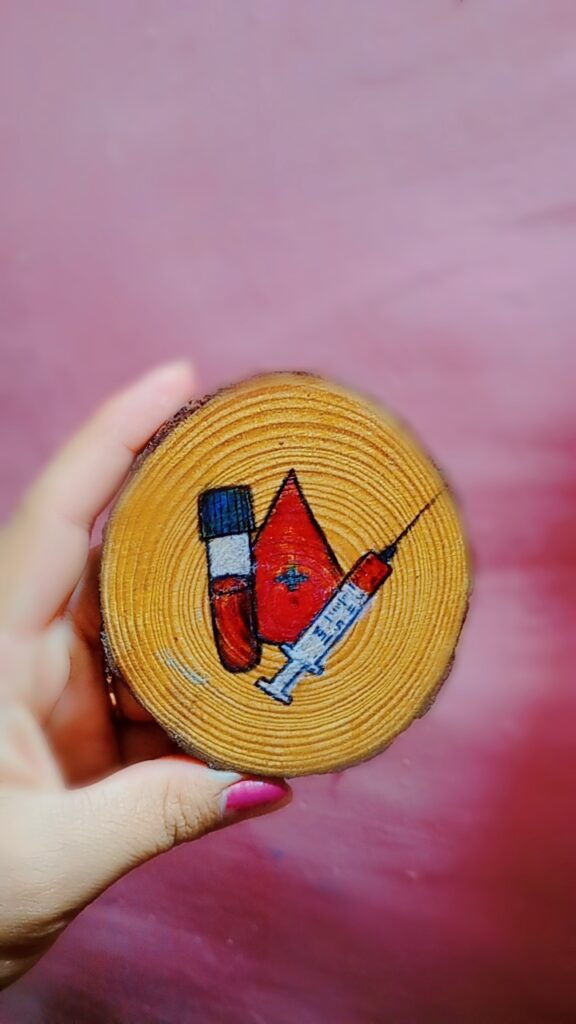
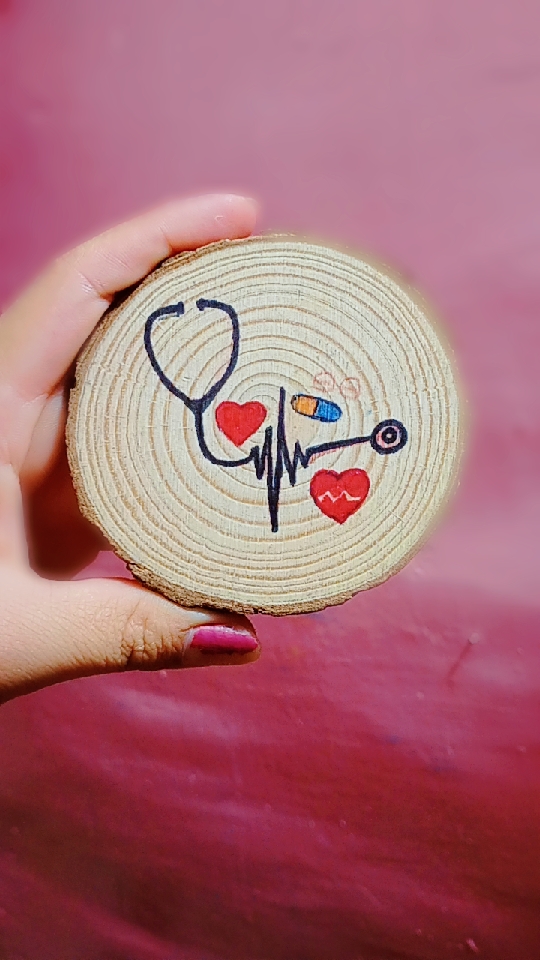
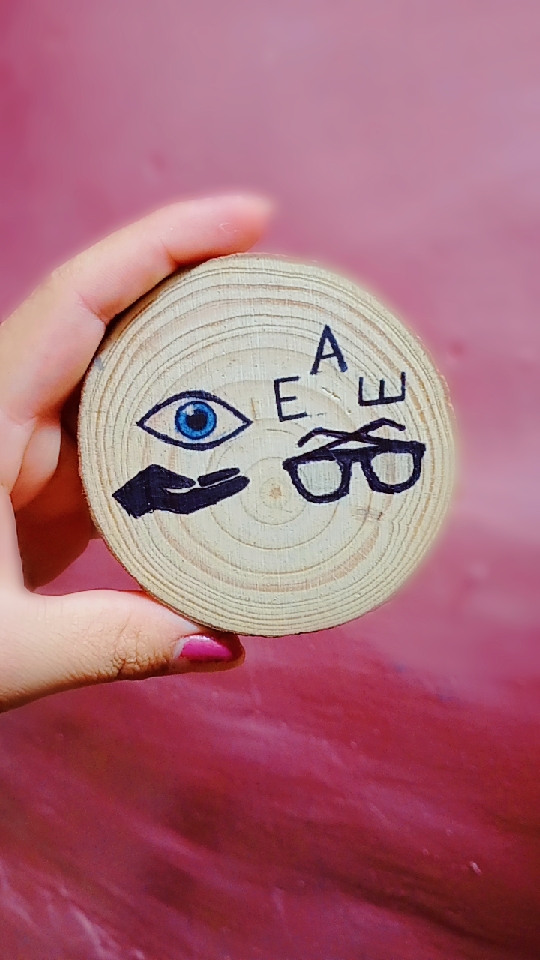
Noor chose an unconventional artistic style, turning circular natural wood slices into her personal canvases (Wood Slice Art). With absolute precision that mirrors the accuracy of her medical specialization, she began engraving and painting the professional symbols of various medical and health fields with a distinct visual perspective.
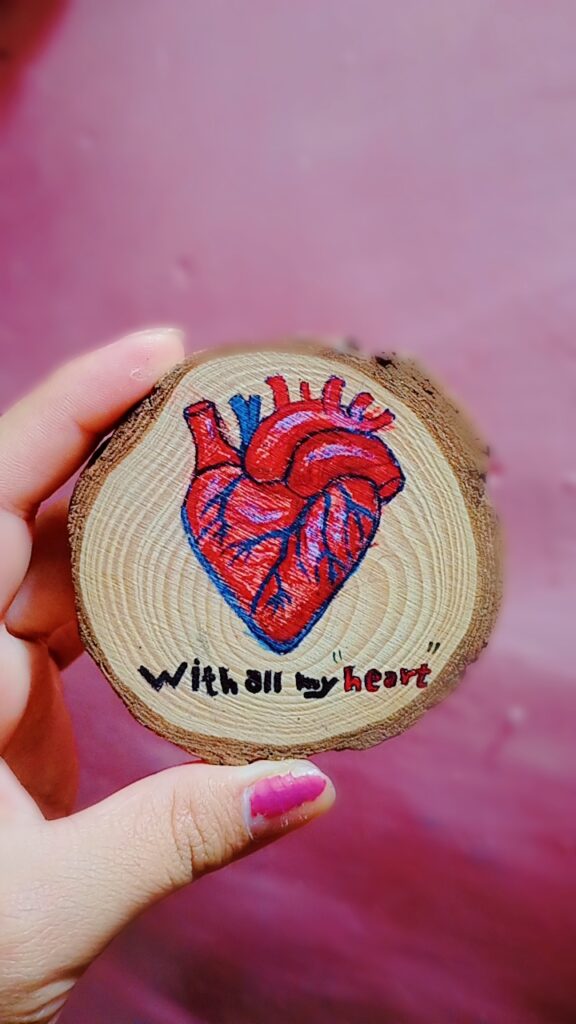
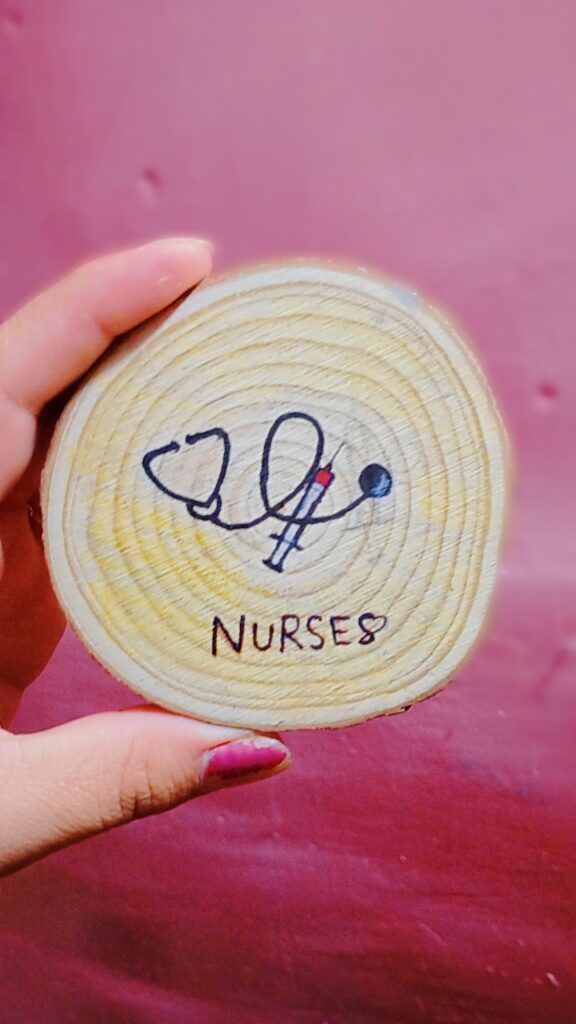
Noor did not isolate her talent within the boundaries of her own specialization in optometry—which she documented with an expressive drawing combining the human eye, medical eyeglasses, and the famous visual acuity chart letters. Instead, her brush extended to salute her colleagues in other medical professions. She brilliantly depicted the pharmacy symbol (the Rod of Asclepius), the nursing logo (“Nurses”), and the colored anatomical details of a beating heart accompanied by the phrase “With all my heart,” alongside laboratory and pathological analysis tools such as blood collection tubes, medical syringes, stethoscopes, and electrocardiograms (ECGs).
The Integration of Visual Precision and Artistic Sense
Reading the natural lines of wood correctly and adapting colors and drawings onto it requires a trained eye that catches details, as well as a hand with the highest levels of control and stability. These are the very core skills that Noor builds daily throughout her specialized academic journey. She has managed to transform simple materials inspired by nature into souvenirs and artistic pieces of high sentimental value, proving that art and science are two sides of the same coin called innovation.
Noor Ali’s success story provides an inspiring model of how to transform personal passion into a visual message that serves the university and medical environment. It confirms that creativity is not limited by a specialization, but rather blossoms wherever there is willpower and a sincere artistic touch.