
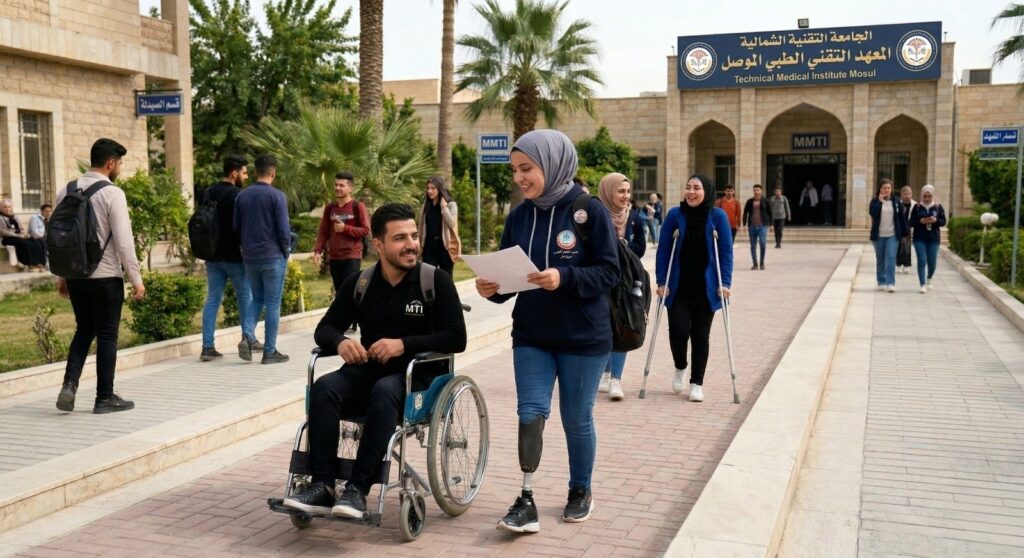
The Department of Optometry Techniques is dedicated to fostering an inclusive, fair, and equitable educational environment. This ensures that all students, regardless of their diverse abilities, have full access to high-quality academic learning and advanced clinical training. Our vision is built on the belief that diversity strengthens the healthcare system and that physical or sensory challenges are never barriers to excellence in optical sciences. Through this guide, the department outlines the regulations and accommodations designed to empower students to become skilled professionals serving the community’s vision care needs.
1. Purpose of the Guide
To define the rights, responsibilities, and organizational mechanisms that guarantee the full integration of students with special needs into theoretical lectures, practical laboratories (such as Physical Optics and Lenses labs), and outpatient clinics. This is achieved while maintaining the highest standards of educational quality, clinical competence, and patient safety.
2. General Regulatory Principles (Legal Reference)
This guide aligns with national higher education legislation, disability rights laws, and relevant international conventions, focusing on:
The Right to Inclusion and Equal Opportunity: Providing equal access to learning, clinical training, and assessment without discrimination.
Universal Design and Architectural Accessibility: The department and college commit to adapting the physical environment and examination rooms to ensure student independence and mobility.
Strict Data Confidentiality: Handling medical reports and personal files with absolute privacy. Data is restricted to the support committee and accessed only with the student’s consent to determine appropriate accommodations.
3. Academic and Environmental Accommodations
Given the technical and precise nature of optometry equipment (such as Phoropters, Slit Lamps, visual acuity charts, and keratometers), the department provides the following tailored adjustments:
A. Laboratory and Clinical Environments
Adaptive Clinic and Lab Setups: Providing hydraulically adjustable examination chairs and ophthalmic units to accommodate students with mobility challenges or wheelchair users.
Assistive Technology and Software: Allowing the use of magnified display screens or digital systems that transfer readings and data directly from diagnostic devices to personal computers. Utilizing remote-controlled Digital Snellen Charts to support students with physical or sensory needs.
Equipment Adaptations: Providing additional stabilizers and mounts for handheld devices (like direct ophthalmoscopes) to assist students who experience fine motor difficulties.
B. Theoretical Lectures and Academic Assessment
Flexible Assessment and Exams: Granting extended time during theoretical exams and Objective Structured Clinical Examinations (OSCE) that require precise manual tasks. Written exams can also be converted into digital or oral formats based on individual needs.
Accessible Learning Materials: Delivering curricula, ocular disease medical atlases, and technical equipment manuals in flexible electronic formats that support high magnification, color contrast adjustment, and text-to-speech features.
4. Mechanism for Requesting Support
To benefit from these policies, students should follow these steps:
Submit an Application: Apply formally to the “Special Needs Support Committee” at the department at the beginning of the academic semester or year.
Provide Supporting Documents: Attach an official, certified medical report detailing the nature of the condition and recommended accommodations.
Approve an “Individualized Accommodation Plan”: The department administration, along with academic and clinical supervisors, will meet to design a customized support plan that ensures the student achieves the mandatory clinical competencies while safeguarding patient safety.
5. Rights and Responsibilities
| Student Rights in Optometry | Student Responsibilities and Professional Commitment |
| Learning and training in a safe, supportive environment completely free from bullying or discrimination. | Strict adherence to the ethics of the optometry profession and professional conduct with patients in educational clinics. |
| Providing flexible training alternatives in clinical sessions if permanent or temporary health conditions restrict the use of specific devices. | Early and honest disclosure of health conditions to ensure accommodations are prepared and implemented in a timely manner. |
| Continuous academic and psychological counseling to guide the student toward specialization areas suited to their strengths (e.g., contact lens design, general refraction, low vision rehabilitation). | Striving for the utmost precision required in diagnosing refractive errors and prescribing corrective lenses to protect patient vision and safety. |
6. Monitoring and Grievance Committee
If a student encounters any obstacles in activating their approved accommodations, or faces physical or academic barriers within the optics labs and clinics, they have the right to submit a formal written grievance to the Head of the Department. The administration is committed to reviewing the request immediately and taking appropriate corrective actions within (5) working days to ensure academic continuity.
Department Message: Your precision in diagnosis and your dedication to helping others see the world clearly stems from your inner vision and knowledge. The Department of Optometry Techniques is your supportive partner in empowering your skills and building your promising professional future.