
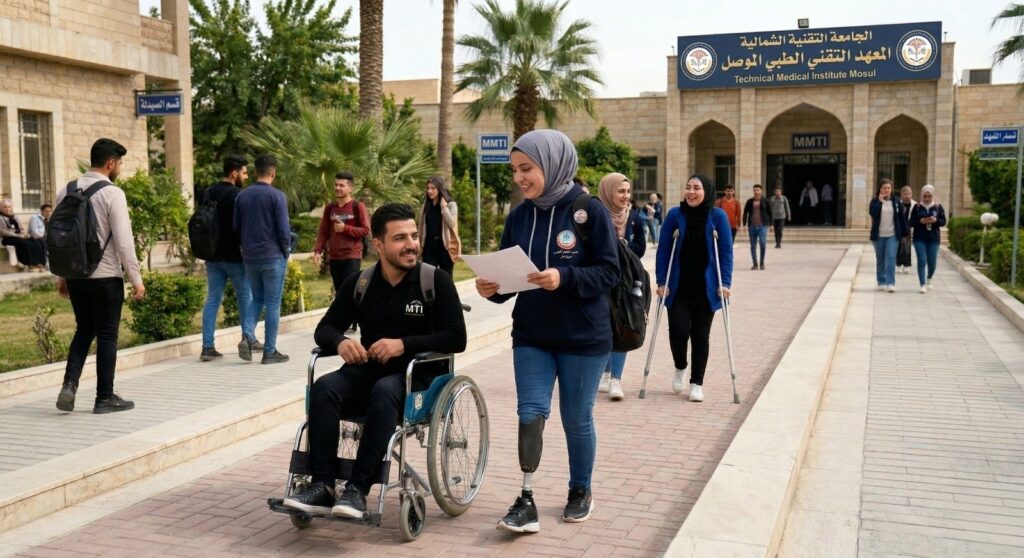
The Department of Pharmacy Techniques is committed to fostering an inclusive and equitable educational and academic environment that ensures all students, regardless of their abilities, have the full right to academic achievement and practical training. The department’s vision stems from merging scientific competence with humanitarian responsibility, believing that individuals with special needs possess promising potential that can be invested in and developed by providing the necessary legislation and supportive environment to enable them to excel in the pharmaceutical manufacturing and pharmacy care sectors.
Purpose of the Guide: To clarify the laws, rights, and duties that guarantee the integration of students with special needs into theoretical lectures, practical laboratories, and field-training pharmacies, while fully maintaining the quality of education and occupational and pharmaceutical safety standards.
2. General Legislative Principles (Legal Reference)
This guide is based on national higher education laws and care for individuals with disabilities, as well as international conventions, represented by:
The Right to Inclusive Education and Equality: Providing equal opportunities in learning, laboratory training, and academic assessment without any discrimination.
Environmental and Technological Adaptation: The department’s commitment to modifying the physical environment and providing assistive tools that ensure the student’s independence.
Privacy and Data Confidentiality: All medical files and reports related to the student are kept strictly confidential and are only circulated within a narrow scope to determine appropriate accommodations, subject to the student’s consent.
3. Academic and Environmental Accommodations in the Department of Pharmacy Techniques
Given the sensitive nature of the Department of Pharmacy Techniques (compounding medications, precise dosage measurements, and handling chemicals and biological products), the legally mandated accommodations include:
A. Laboratory and Pharmaceutical Environment:
Adapting Chemistry and Pharmaceutics Labs: Providing laboratory benches and digital balances with adjustable heights to accommodate students with physical disabilities or wheelchair users.
Assistive Technology for Reading and Calculating Dosages: Allowing the use of prescription-reading applications, digital screen magnifiers for equipment displays (such as chromatography or dissolution testers), and voice-assisted pharmaceutical calculation software for students with visual or learning difficulties.
Enhanced Safety Tools: Providing clear labels and warning instructions for toxic or hazardous chemical materials (including Braille if necessary), while ensuring easy access to safety equipment inside the lab.
B. Theoretical Lectures and Assessment:
Flexibility in Exams and Evaluation: Granting additional time during theoretical and practical exams (such as identification exams for medications and pharmaceutical dosage forms), with the option to convert examinations into digital or oral formats that suit the student’s condition.
Availability of Educational Materials: Providing scientific references (such as the Pharmacopeia) in flexible, modifiable, and searchable electronic formats to facilitate studying.
4. Mechanism for Obtaining Support and Accommodations
To ensure the implementation of these legislations and policies, please follow these steps:
Submit an Official Request: The student submits a request for accommodation to the “Care for Individuals with Special Needs” committee in the department at the beginning of the academic year.
Approved Medical Report: Attaching an official medical report explaining the nature of the need (especially hearing, visual, or physical disabilities, or chronic allergies to certain chemical materials).
Formulating an “Individualized Accommodation Plan”: The department coordinates with laboratory instructors and academic supervisors to develop a support plan that ensures the student’s safety while handling pharmaceutical materials without impacting the quality of the acquired skills.
5. Rights and Duties
| Student Rights in the Pharmacy Techniques Department | Student Duties and Pharmaceutical Compliance |
| Learning in a safe, respectful environment, completely free from any bullying or discriminatory practices. | Strict adherence to Good Laboratory Practices (GLP) and safety standards. |
| Receiving academic and psychological guidance and counseling to help choose the most suitable career path for their abilities (hospitals, pharmaceutical factories, community pharmacies). | Early and accurate disclosure of any health conditions (such as severe allergies to chemicals) to ensure a safe working environment for them. |
| Benefiting from structurally adapted and equitable pharmaceutical field training periods equal to their peers. | Diligent effort to achieve the extreme competence and accuracy required in compounding and calculating medication dosages, which impact patient lives. |
6. Complaints and Grievances
If a student faces difficulties obtaining their rights stipulated in this guide, or experiences an unaccommodated environment during practical or summer training in hospitals and pharmacies, they have the right to submit a written grievance to the Head of the Department. The department administration is committed to reviewing the grievance and taking appropriate corrective actions within a period not exceeding (5) business days to ensure their academic progress is not affected.