
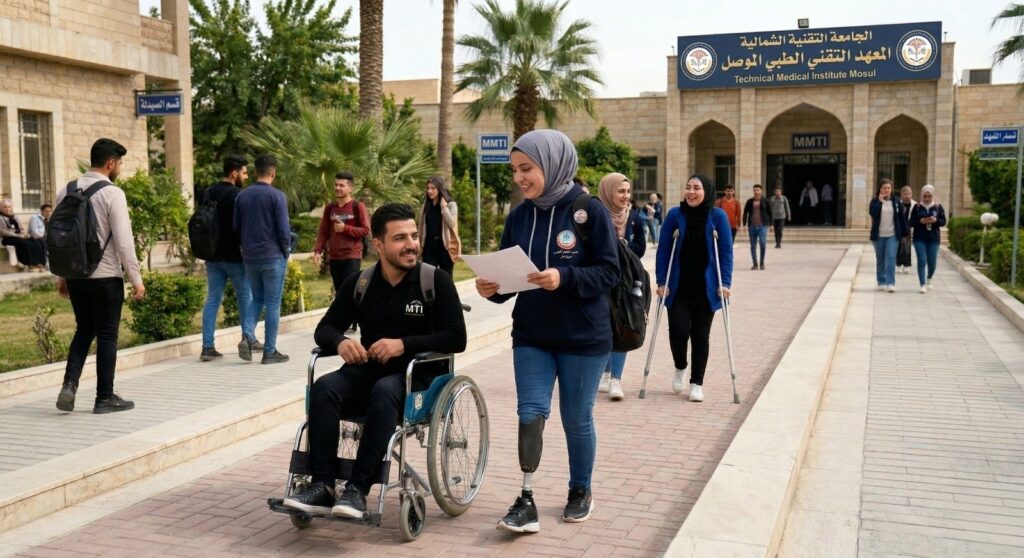
1. Introduction and vision of the section
The Department of medical laboratory technologies is committed to providing a fair and accessible educational environment that guarantees all students, of all abilities, the right to receive high-quality academic education and practical training. This guide is based on the belief that diversity enriches the academic community, and that systematic support for students with special needs is a national, legal, and ethical duty.
2. General legislative principles (legal reference)
This guide is based on national laws (on the care of people with special needs, employment and education) and relevant international agreements, which provide for:
Universal access: removing environmental, academic, and digital barriers that prevent students from fully interacting.
Equal opportunities: provide the same educational and training opportunities available to peers, taking into account individual needs.
Confidentiality and privacy: the department is committed to maintaining the confidentiality of the student’s medical data and files, and they are shared only with the concerned authorities to provide facilities and with the student’s consent.
3. Academic and environmental facilities in the Medical Laboratory Department
Due to the special nature of the Department of medical laboratory technologies (which includes the handling of biological samples, precision instruments, and chemicals), the supporting legislation includes the following:
A. Laboratory environment and practical training:
Adaptation of laboratory stations: provision of adjustable benches and work surfaces (Benches) to suit students using wheelchairs or with motor disabilities.
Available safety tools: ensure that safety means (such as emergency eye wash, fire extinguisher, first aid) are accessible to all, and provide visual and audio warning signals for emergency situations.
Assistive technology: allowing the use of tablets, digital amplifiers, or audio software to read The Protocols of medical experiments and analyzes.
P. Theoretical lectures and assessment:
Additional time: students with special needs (depending on the medically approved case) are given additional time for Theoretical and practical exams (stations/OSCE).
Alternatives to assessment: the possibility of modifying the exam formats (for example: converting written questions to oral or digital, or using a clerk’s facilities) in a way that does not violate the basic academic standards of the subject.
Lecture recording: allows audio recording of lectures or obtaining scientific material in advance to help students with learning difficulties or audiovisual disabilities.
4. The mechanism of obtaining subsidies and privileges
To ensure the orderly operationalization of this legislation, the student follows the following steps:
Application submission: the student submits an official application to the “Special Needs Care” Committee at the department or college at the beginning of each academic year (or when disability occurs).
Supporting documents: attach an official and approved medical report from the competent health authorities indicating the nature of the need and the recommended facilities.
Individual support plan: the Department’s management coordinates with the professors of subjects and laboratory supervisors to develop a “customized facilitation plan” that ensures the safety of the student and his scientific achievement inside and outside the laboratory.
5. Rights and duties
Rights of the student with special needs student duties and academic commitment
Full protection from any form of bullying or discrimination. Adhere to strict biological and chemical safety rules inside laboratories.
Get continuous academic and psychological counseling. Early disclosure of needs to ensure timely provision of facilities.
Participation in extra-curricular activities and scientific events. The pursuit of the skill competence required for the profession of “medical laboratory technician”.
6. Follow-up and Complaints Committee
In the event that a student encounters any difficulties in applying these legislations or is subjected to unfairness, he has the right to file a grievance complaint directly to the head of the department or the “Student Affairs Committee”, which is committed to broadcasting the topic within a period not exceeding (7) working days to ensure the smooth running of the educational process.
Always remember: your disability does not cancel your ambition, and the Department of medical laboratory technologies is your partner to empower your skills and craft your future career.