Key Educational Rights for Students with Special Needs
1. Introduction and Department Vision
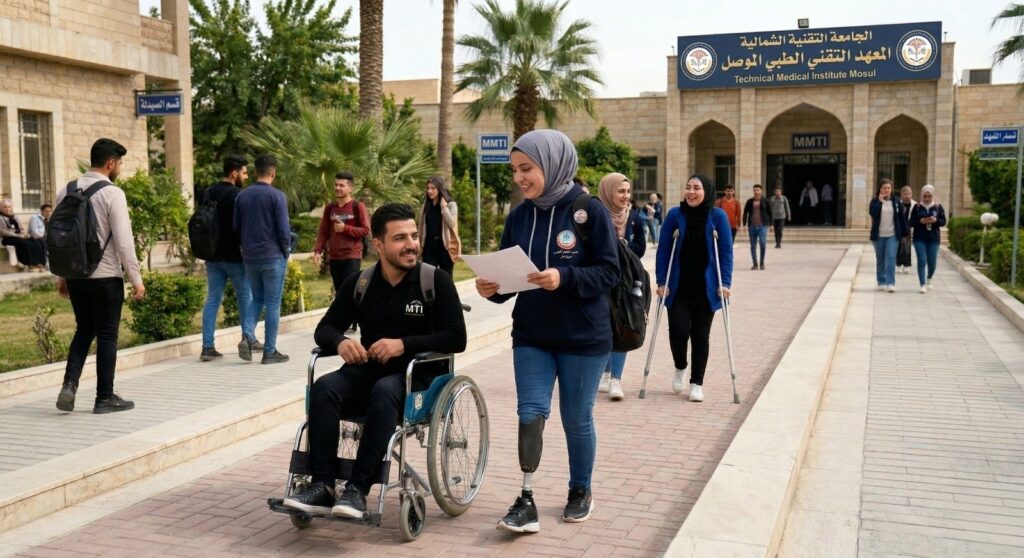
The Radiological Techniques Department is committed to providing an inclusive and equitable educational environment that offers all students, regardless of their diverse abilities, the full opportunity for academic excellence and clinical training. This guide stems from the belief that diversity strengthens the medical system, and providing the necessary accommodations for students with special needs is both a legal and moral obligation, aiming to empower them to hone their skills and become active contributors to the healthcare system.
Purpose of the Guide: To define the rights, duties, and legislative mechanisms that ensure the integration of students with special needs into theoretical lectures and practical training within the department’s laboratories and training hospitals, while strictly maintaining radiological and occupational safety standards.
2. General Legislative Principles (Legal Reference)
This guide is based on national laws for empowering persons with disabilities and relevant international conventions, filtering down to:
Non-discrimination: Guaranteeing equal opportunities in admission, education, and assessment without any bias.
Safe Access: Adapting the educational and field environments to match the physical and sensory abilities of the students.
Strict Confidentiality: Commitment to preserving the privacy of the student’s medical reports, restricting their sharing to a narrow scope with the entities responsible for providing accommodations, and only with the student’s explicit consent.
3. Academic and Environmental Accommodations in the Radiological Techniques Department
Given the nature of the department, which involves dealing with complex imaging equipment, magnetic fields, and ionizing radiation, the regulations take into account the following accommodations, provided they do not conflict with safety standards:
A. Laboratory Environment and Medical Imaging Rooms:
Adapting Control Rooms: Ensuring that students with mobility disabilities can access the control panels of radiology equipment ($X$-Ray, CT, MRI) and digital workstations.
Tailored Radiological Safety and Protection: Providing lead aprons and personal protective equipment (PPE) in comfortable weights and designs that suit students with special physical needs, while ensuring easy monitoring of personal dosimeters.
Assistive Technology in Diagnostics: Allowing the use of magnified display screens or assistive software in digital image processing and radiation therapy planning laboratories to support students with partial visual impairments.
B. Theoretical Lectures and Academic Evaluation:
Flexibility in Examinations: Granting additional time in theoretical and practical exams (such as exams identifying anatomical parts and patient positioning), or providing digital alternatives to written exams.
Accessible Multimedia: Providing anatomical atlases and educational radiographic images in high-quality digital formats that support zoom and high-contrast features to facilitate studying.
4. Mechanism for Requesting Accommodations and Support
To benefit from the department’s legislative policies, please follow these steps:
Submitting the Request: The student submits a formal request to the coordinator of the Special Needs Committee in the department at the beginning of the academic year.
Medical Report and Evaluation: Attaching an approved medical report that precisely explains the nature of the need (especially if the student carries implanted medical devices like pacemakers, which may conflict with the MRI environment).
Approving the Facilitation and Safety Plan: Forming a mini-committee within the department to develop an individualized support plan that ensures the student achieves the required skills while fully maintaining their biological and radiological safety.
5. Rights and Duties
| Student Rights in the Radiology Department | Student Duties and Professional Commitment |
| An educational environment free from bullying and discrimination, structurally engineered for accessibility. | Full compliance with radiation protection regulations. |
| Providing safe alternatives in practical training if there are temporary or permanent health contraindications. | Accurate disclosure of health status to ensure no exposure to radiological or magnetic hazards. |
| Receiving continuous academic advising to guide the student toward the sub-specialties best suited to their abilities within the field. | Active striving to achieve the required skill competency in medical imaging quality. |
6. Complaints and Grievances
If a student feels that their approved accommodations have not been implemented, or encounters difficulties in the practical training environment and hospitals, they have the right to submit a formal grievance to the department administration. The administration is committed to reviewing the request and resolving the issue within five (5) working days, in cooperation with field training supervisors, to ensure the safe continuity of their academic attainment.